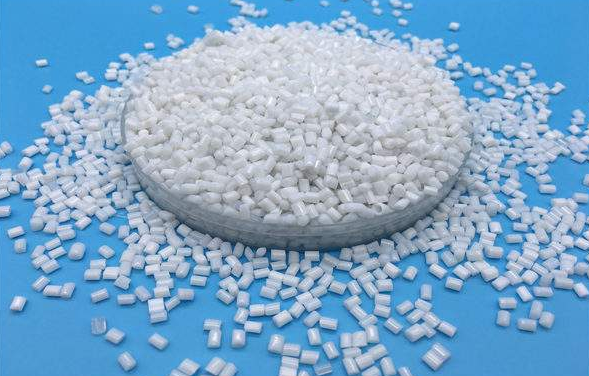
With the increasing use of plastic products in the fields of wire and cable, construction, packaging, transportation, electronics, furniture and clothing, its burning problem has increasingly attracted the attention of various countries.
Except for plastics containing halogens such as fluorine and chlorine, other polymers consisting of carbon, hydrogen and oxygen have varying degrees of flammability.
When these plastics burn, they not only give off fire, but also smoke and poison gas, so the suitable flame retardant masterbatch should be selected according to its compatibility with resin, flame retardant efficiency and cost.
Flame retardants can be classified into the following four categories in terms of their extinguishing principle:
Produce a gas that smothers a flame.
Antimony trioxide, for example, reacts with the HCL emitted by combustion in PVC to produce a stuffy gas, the chlorine oxide of antimony.
It absorbs the heat generated during combustion and ACTS as a coolant to slow down the combustion rate.
Aluminum hydroxide, for example, contains as much as 84 percent chemically associated water in its molecules, which remains stable at most rate processing temperatures but begins to break down when it exceeds 200 degrees Celsius, releasing water vapor.
And for every 1 gram of aluminum hydroxide decomposed, 1.34*103J (36kcal) heat is absorbed.
There is a layer of coating that is isolated from oxygen.
For example, phosphates produced by the combustion of flame retardants such as phosphate esters are oxygen-insulating coatings.
Generate free radicals that can react with plastics and act as flame retardant.
The combustion properties of the products they react with plastics are extremely poor.
Generally, flame retardants for masterbatch are divided into two types: additive type and reactive type.
Antimony trioxide, aluminum hydroxide and tritoluene phosphate are typical inorganic and organic additive flame retardants.
Reactive flame retardants, on the other hand, attach to the molecular chain of the polymer during polymerization, making the polymer itself flame retardant.
For example, epoxy resins made with tetrabromobisphenol A instead of bisphenol A, and unsaturated polyester resins containing tetrachloro-phthalic anhydride have permanent flame retardants, which are both monomers and good flame retardants.
But these flame-retardant resins are expensive.